
Supercharging CAD Workflows with AI/ML
Exploring AI feasibility through UX
Background
CAD tools are precise and powerful, yet many everyday workflows still rely on repetitive manual actions.
As engineering teams deal with complex models and tighter timelines, even small frictions add up.
With AI and ML becoming more capable, this project set out to explore where intelligence could naturally support CAD users without altering the craft of modeling itself.
Problem/Opportunity
CAD workflows still include many repeated steps that add friction but offer no design value. The opportunity was to explore where AI could quietly reduce this repetition, support decision making, and fit naturally into the way engineers already work.
Feasibility Exploration
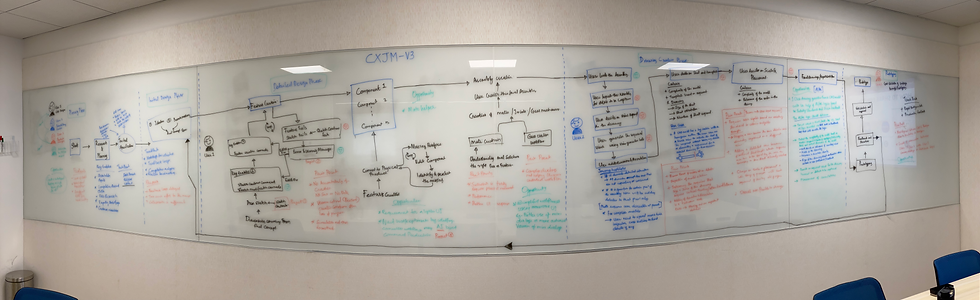
The exploration focused on identifying areas where intelligence could make CAD feel lighter and more intuitive.
We looked at patterns in user behavior, common bottlenecks, repetitive decision points, and moments where the system could learn and respond.
🧭 Defined Boundaries for Responsible AI
The study clarified where AI should help, where it should stay quiet and how to keep engineers in control at all times.
🧩 Validated User Expectations
Interviews and tests revealed what engineers trust, what they ignore and what feels like unwanted automation.
⚙️ Early Prototypes that Showed What’s Possible
Lightweight experiments helped us see how AI could: Suggest tools, Prepare views, Adjust dimensions, and Learn from behaviors.
🗺️ A Roadmap for Future Exploration
The outcome was not a single feature but a set of clear directions that can guide long-term AI integration inside CAD tools.
View More Work


CAD Workflows: Designing for Recovery
